

ARMY NAVY AIR FORCE USPHS



250th Anniversary Tribute:
Honoring Uniformed Nurses
As America marks 250 years of independence, MUSNAVC proudly celebrates
tHe legacy of Uniformed Nurses—past, present, and future.
Honoring a Legacy: From the earliest caregivers of our nation’s wounded patriots to today’s Uniformed Service Nurses, your service defines compassion, strength, and military readiness.
Who We Represent: Army, Navy, Air Force, and U.S. Public Health Service Nurses united in service and purpose.
Celebration Series: Monthly stories, articles and/or videos June–October 2026
Call to Action – Help Us Tell Their Stories:
Recognize a nurse you’ve served with
Submit name, photo, and 2–3 bullets or a short paragraph highlighting their impact. Submission of your own story acceptable.
Leave a testimonial or send us an email at musnavc@gmail.com
Help us honor those who served before us, beside us, and those shaping the future.



Nurses with a Mission ~ Never Stop Serving ~ 250 Years of Freedom
Testimonials
Patricia 'Pat' Nishimoto, COL (Ret), US Army

Early in my career I learned from Pat Nishimoto what nursing 'care' was all about and what being a patient advocate truly meant. Pat was the oncology nurse specialist on the ward that I was assigned to. Being a new graduate nurse, new Army officer, and in a totally new environment, I had a lot to learn. As you know, things move fast and you better learn quickly. I closely watched Pat with her patients and knew she had a special talent and caring touch.
After a long shift on the oncology ward, I paged Pat to tell her one of my patients needed to talk with her about his impending death and concerns. I just knew Pat would provide comfort and provide what was needed. After explaining things to Pat she came back with the unexpected directions. "He is YOUR patient and you know what he needs. Do it now!"
After several hours being with my patient and family, they thanked me. He died a few days later. That one event gave me the courage and confidence to truly care for patients and families. Pat Nishimoto helped me to realize just what a honor and blessing it is to be part of the living with dying experience. Pat has been an ongoing mentor and friend over the years. Mahalo. Joe
William 'Bill' Bester, BG (Ret), US Army

My Story of “Uncle Bill”
In December 1996, I arrived at my first duty station as a brand-new Second Lieutenant at the 67th Combat Support Hospital in Würzburg, Germany. I was a new graduate and a single mom, eager to serve but still finding my footing in the Army.
Within weeks, I faced a challenge that felt overwhelming. Due to an administrative error, I went nearly two and a half months without pay. I was told by finance that I “wasn’t in the system” as if I had somehow been erased from the Army altogether. It was a frightening and isolating experience, made only slightly more manageable because I had government housing.
An officer named Major Friday heard about my situation and brought it to the attention of the Chief Nurse, Colonel Bill Bester. At the time, I had never met him. When I was told to report to the Chief Nurse’s office, I was incredibly nervous. Why would the CNO want to see me? I will never forget that moment. Colonel Bester looked at me and, in his unmistakable command voice, said, “What’s this I hear about you not getting paid?” I explained the situation. Without hesitation, he responded, “Where is your car? Let’s go.” He personally took me to finance. After stepping into a back office with the finance director, he emerged about 15–20 minutes later. That same day, I was paid. But what mattered most wasn’t just that he solved a problem - it was that he saw me. A junior officer. A young single mother. Someone who needed a leader to step in and say, you matter, and we take care of our own.
From that day forward, Colonel Bester became “Uncle Bill.” Throughout my career, he continued to check on me, to mentor me, and to quietly ensure I was on the right path. Even as he rose to Brigadier General and Chief of the Army Nurse Corps, he never lost that personal connection to those he led. He promoted me to Captain a few years later. He attended my wedding after his retirement. And in a twist of fate that speaks to his lifelong commitment to service and education, he was a professor at the University of Texas at Austin while I was in graduate school there. In both the best moments and the hardest seasons of my career, Uncle Bill was there and he still is. A mentor. A steady presence. A trusted friend.
As we celebrate the 250th birthday of our nation, I am reminded that the strength of America’s Army is not only found in its missions or its milestones, but in leaders like Brigadier General Bill Bester. Leaders who embody selfless service, who lift others when they need it most, and who leave a lasting impact that extends far beyond their rank or uniform.
Uncle Bill didn’t just fix a pay issue. He shaped a life. And that is leadership worthy of the America we celebrate today. Tammy

Carol Ann Beal, LTC, USArmy (Deceased)
One of my earliest and most profound heroes is LTC Carol Beal, who was my Section Chief when I first arrived at Blanchfield Army Community Hospital at Fort Campbell, KY, in 1982. As a direct commission, newly minted 2LT, and complete with a husband, son, and baby on the way, I was not what a "brand new Butterbar" usually is!
LTC Beal and her husband took my family and I under their wing and eased our transition into the military, setting the example of how wonderful military life could be and helping us navigate our new lives and career. She shared with me that she loved being a military nurse, and was very sad that she had to leave the Air Force when she became pregnant (back in the 1970's). She ran with the opportunity and completed her Master's degree (not common either in the 1970's), taught nursing, and ran a farm with her husband (a retired AF Pilot), and daughter.
After 10 years, she could not resist the urge any longer and was turned down when she tried to re-join the AF, but fortunately, the Army let her re-commission! I consider myself so lucky that our paths crossed and that I had such a sweet, compassionate, and caring professional to show me what a good leader is and should aspire to be. Her husband told a story of a young LT he trained who contacted him 20 years later, asking to promote him to BG!!
I reached out to LTC Beal when I was about to pin on 0-6, and although she was unable to attend, I was able to thank her for the wonderful mentor she was and how she inspired me to never give up what you truly believe in. Diane
Mary Link, MG (Ret), US Army Reserve

Joining the Army was a ticket out of Nebraska and, after OBC, a direct move to the west coast. What was unlocked for me, was a career long education not only about nursing, but also how the Army works and mostly, how to be a thoughtful, caring leader. And even though I have retired, my love for the Army and Army Nursing is still strong.
Serving America in this way, dedicating my life and career to helping others continues through volunteer service in many different ways but more specifically, serving my home state.
Kristina Meservy, LCDR(Ret) US Navy

I was initially a Nurse Corps Candidate to pay for my last year of college/nursing school. It was probably the best decision I ever made. As a BSN Graduate, we were taught concepts without clinical reinforcement. I was not prepared for my first weekend on duty. I was responsible for a ramp with 240 patients split into 7 wards. Luckily, I had senior corpsmen on duty with me. I was rotated through all of the male patient areas and was not happy. At the end of my first year, I was severely depressed. I was asked where I wanted to work. I said pediatrics. I was guaranteed a three month trial which turned into three years.At the end of that period, I was sent to the PNP Program at Northeastern University with 12 hours of classes weekly with clinical preceptorship at Chelsea Naval Hospital which was then still open. Then back to Charleston for a 4 year tour as a PNP.
I met and married my first husband there. My second tour was the Admiral Joel T. Boone Clinic at Littlecreek, VA. My first two children were born there--Marie in 1978 and Eric in 1981. I detached from Littlecreek in 1982 and was then stationed in Groton, CT from 1982-1989. My third child, Katharine, was born there in 1989. I retired from the Navy in 1989.
Legislative Advocacy has been and remains my passion. I cherish my lifetime memberships in MOAA, DAV, and DAVA.
Tina
Maureen Holtzman, CAPT(Ret) US Navy

One Navy Nurse I knew is Maureen Holtzman. She served on the USS Repose during Vietnam. One story she told us about related to her service on the Repose as a LT. In the early 1990s she was eating lunch in the National Naval Medical Center cafeteria and laughed at a story told at the table. A man walked over to the table and asked for her by her maiden name. He said he recognized her laugh and he remembered her from his hospitalization on the Repose. They were both in tears! Kathleen
Joe Devers, Col(Ret) US Air Force

My nurse hero is my husband, Joe Devers, a U.S. Air Force Nurse Corps nurse. While stationed at Lackland AFB, he was one of three RNs selected for an Air Force pilot program for nurse practitioners. He completed the program successfully, bringing the professionalism and enthusiasm that defined his career and helped demonstrate the value of nurse practitioners in health care.
However, his greatest qualities were shown in his role as a loving, devoted husband and father to three sons, who grew up emulating his character. He was also my greatest cheerleader as I pursued a career as a Navy Nurse. Joe never failed to support me in my career endeavors and knowing that I had that kind of support made my Navy career that much better. Ann
Mary Littlejohn, LtCol(Ret) US Air Force
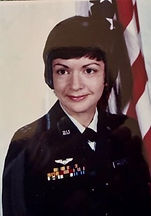
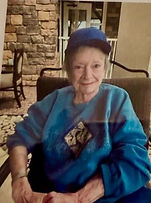
It is a privilege, on this 250th anniversary to submit Lt Col. Mary K Littlejohn for recognition on her military and nursing contributions to both our nation and humanity at large. Mary is known by her military and nursing colleagues as “a nurse’s angel,” “a nurse’s heart is where it starts,” (that is basic in her DNA), “a nurse’s nurse” and by the Society of Air Force Nurses that Mary “does not know the word ‘No’ when it comes to providing care to others.”
Lt Col Littlejohn served in the USAF from 1967-1987. Once she finished flight nurse training, she said she knew immediately she wanted to go to Vietnam as she felt she could do more with her skills in helping in Vietnam then stateside. While serving in Vietnam as flight nurse on the C-130 Hercules she completed over 100 aeromedical evacuations. In 1973 she was awarded the Aeromedical Association’s Flight Nurse of the year for her 1971-1972 Vietnam tour of duty. In recognition of her service, she also participated in the Colorado’s first all-women veterans Honor Flight to Washington DC to visit all the military memorials and the Women in Military Service Museum. In 2025 she was presented a Quilt of Valor and recognized as the Military Women’s Memorial “Living Legend” for her military service.
It should be noted that even with her current medical and cognitive challenges she still, in her limited capability, continues to want to help others. This was recently recognized by her memory care facility where she received the “Heart of Gold Award.” Her award states the following: “Mary has such a big heart and spends most of her day making sure that everyone else is taken care of. She is constantly making others laugh with her witty responses. Thank you, Mary, for being such a caring individual. We appreciate your constant williness to help and the way you constantly look after all of us!”
As depicted previously, “caring” is in her DNA!
Pat
U.S. military nursing: From bedside support to combat-ready care

The origins of U.S. military nurses trace back to the Revolutionary War, when women volunteered to care for wounded soldiers, and evolved during the Civil War era into an established nursing force providing much-needed care on the battlefield.
Read further about our history from the services.

LTG Patricia Horoho, USA (Ret)
On 9/11, Lt. General Patricia D. Horoho was headed to a meeting when she watched on television as Flight 175 hit the World Trade Center. Minutes later, she was standing in her office just 100 yards from where Flight 77 crashed into the Pentagon.
Horoho was the second person to arrive at the crash site. In the chaos, she emerged as the experienced leader. Horoho cut clothes from burn victims, helped load helicopters for severely injured and was key in identifying the best evacuation paths for the wounded.
Ten years later, LTG (Ret) Patty Horoho reached the pinnacle of her military career when she was appointed the first female nurse, non-physician Surgeon General and Commander of the U.S. Army Medical Command.
After retiring from military service in 2016, LTG Horoho founded the non-profit 2Serve Together, with a mission to serve, recognize, and connect veteran and active servicewomen.


